


 Main Site
Stone Structure
A puzzling structure is discovered during excavation of the creek channel.
Audio Tour
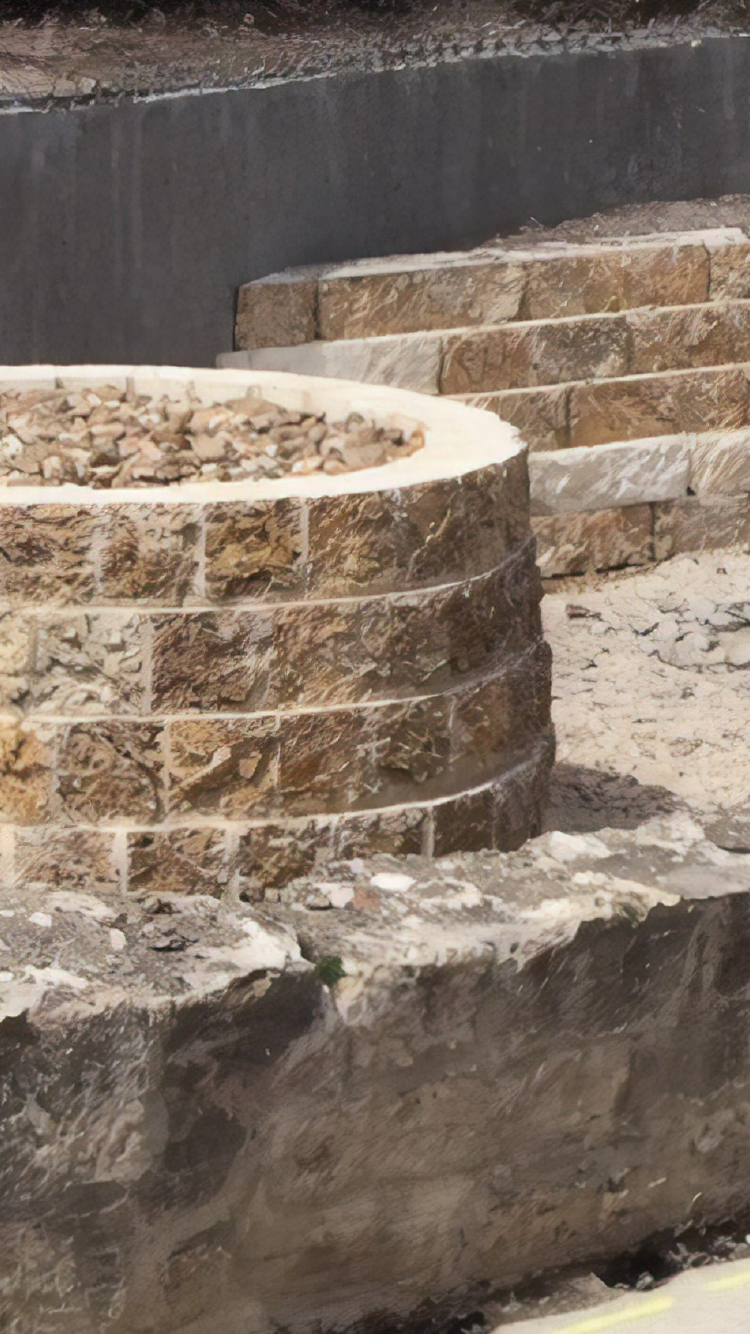
When the San Antonio River Authority commissioned a cultural resources survey to identify archaeological and historical sites that might be impacted by construction, the study revealed a peculiar stone structure. The cylindrical structure was built from rough, dry-stacked pieces of limestone without any mortar, which means it could not have been used as a cistern, or a tank for storing water.
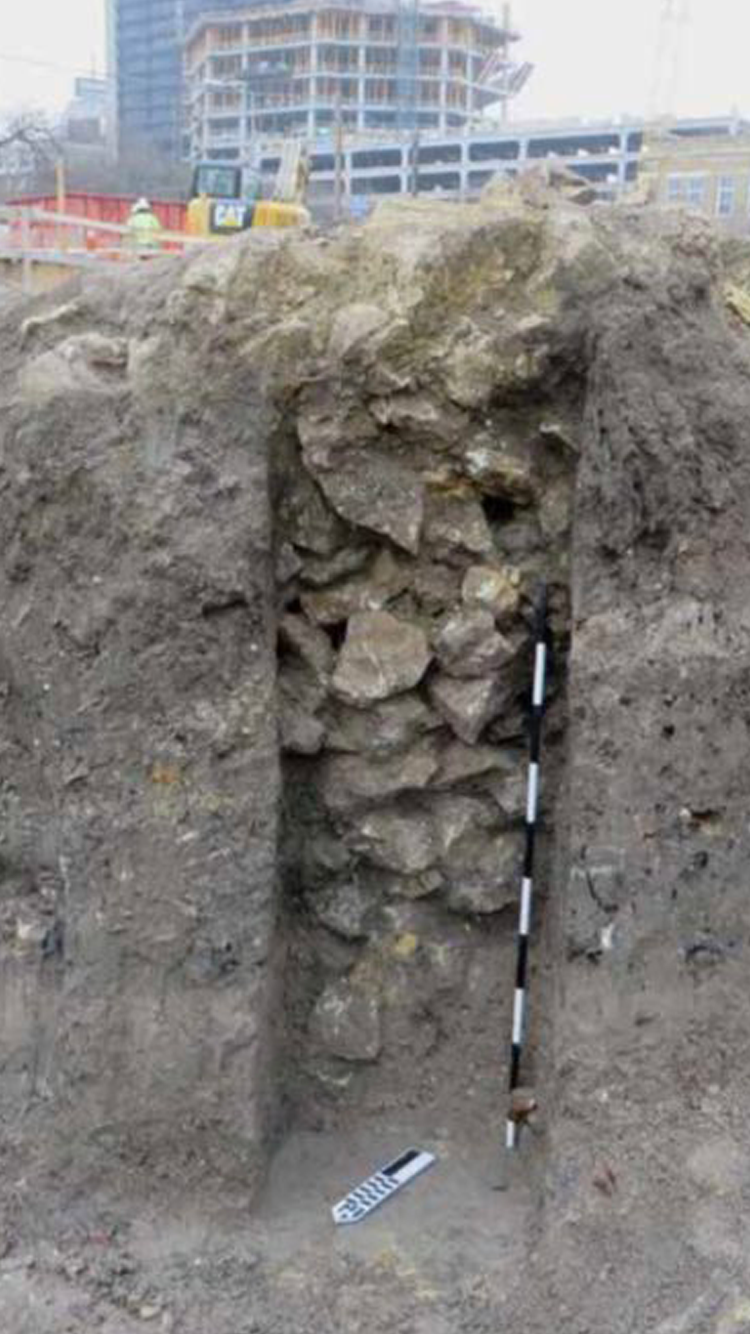
When the team continued investigating, they found ceramic, glass, and metal artifacts that dated to the late 1800s and early 1900s, which is later than the year the nearby Menger Soap Works was constructed in 1860. To further add to the mystery, the excavation team also found a pipe running from the bottom of the stone structure to the creek.
To safeguard this historic enigma, a plan was devised to preserve the fragile structure by encasing it with mortared stone and exposing only the top portion above water, which you can see in front of you now. Take a look at the structure poking out from the water and the excavation pictures on the sign…what do you think it was used for?
Audio Guía
Cuando la Autoridad Fluvial del Río San Antonio encargó una investigación sobre los recursos culturales para identificar sitios arqueológicos e históricos que pudieran verse impactados por la construcción, el estudio reveló una estructura de piedra muy peculiar. La estructura cilíndrica fue construida a partir de pedazos de piedra caliza áspera, apilados en seco sin usar ningún mortero, lo que significa que no podría haber sido utilizado como cisterna, o un tanque para almacenar el agua.
Cuando el equipo continuó investigando, encontraron artefactos de cerámica, vidrio y metal que se originan a finales del siglo XIX y comienzos del siglo XX, que es más reciente que el año en que se construyó la fábrica de jabón Menger en 1860. Para añadir más al misterio, el equipo de excavación también encontró una tubería que corría desde el fondo de la estructura de piedra hasta el arroyo.
Para salvaguardar este enigma histórico, se ideó un plan para preservar la frágil estructura, poniendo un revestimiento de piedra y mortero, y dejando sólo la parte superior por arriba del nivel del agua, que usted puede ver ahora mismo. Observe la estructura que sale del agua y las fotos de la excavación… ¿para qué cree que se usó?
Image Gallery
English
Español
-
A puzzling structure is discovered during excavation of the creek channel.
When the San Antonio River Authority commissioned a cultural resources survey to identify archaeological and historical sites that might be impacted by construction, the study revealed a peculiar stone structure. The cylindrical structure was built from rough, dry-stacked pieces of limestone without any mortar, which means it could not have been used as a cistern, or a tank for storing water.
When the team continued investigating, they found ceramic, glass, and metal artifacts that dated to the late 1800s and early 1900s, which is later than the year the nearby Menger Soap Works was constructed in 1860. To further add to the mystery, the excavation team also found a pipe running from the bottom of the stone structure to the creek.
To safeguard this historic enigma, a plan was devised to preserve the fragile structure by encasing it with mortared stone and exposing only the top portion above water, which you can see in front of you now. Take a look at the structure poking out from the water and the excavation pictures on the sign…what do you think it was used for?
Audio Tour
When the San Antonio River Authority commissioned a cultural resources survey to identify archaeological and historical sites that might be impacted by construction, the study revealed a peculiar stone structure. The cylindrical structure was built from rough, dry-stacked pieces of limestone without any mortar, which means it could not have been used as a cistern, or a tank for storing water. When the team continued investigating, they found ceramic, glass, and metal artifacts that dated to the late 1800s and early 1900s, which is later than the year the nearby Menger Soap Works was constructed in 1860. To further add to the mystery, the excavation team also found a pipe running from the bottom of the stone structure to the creek. To safeguard this historic enigma, a plan was devised to preserve the fragile structure by encasing it with mortared stone and exposing only the top portion above water, which you can see in front of you now. Take a look at the structure poking out from the water and the excavation pictures on the sign…what do you think it was used for? -
Una extraña estructura es descubierta durante las excavaciones del canal del arroyo.
Cuando la Autoridad Fluvial del Río San Antonio encargó una investigación sobre los recursos culturales para identificar sitios arqueológicos e históricos que pudieran verse impactados por la construcción, el estudio reveló una estructura de piedra muy peculiar. La estructura cilíndrica fue construida a partir de pedazos de piedra caliza áspera, apilados en seco sin usar ningún mortero, lo que significa que no podría haber sido utilizado como cisterna, o un tanque para almacenar el agua.
Cuando el equipo continuó investigando, encontraron artefactos de cerámica, vidrio y metal que se originan a finales del siglo XIX y comienzos del siglo XX, que es más reciente que el año en que se construyó la fábrica de jabón Menger en 1860. Para añadir más al misterio, el equipo de excavación también encontró una tubería que corría desde el fondo de la estructura de piedra hasta el arroyo.
Para salvaguardar este enigma histórico, se ideó un plan para preservar la frágil estructura, poniendo un revestimiento de piedra y mortero, y dejando sólo la parte superior por arriba del nivel del agua, que usted puede ver ahora mismo. Observe la estructura que sale del agua y las fotos de la excavación… ¿para qué cree que se usó?
Audio Guía
Cuando la Autoridad Fluvial del Río San Antonio encargó una investigación sobre los recursos culturales para identificar sitios arqueológicos e históricos que pudieran verse impactados por la construcción, el estudio reveló una estructura de piedra muy peculiar. La estructura cilíndrica fue construida a partir de pedazos de piedra caliza áspera, apilados en seco sin usar ningún mortero, lo que significa que no podría haber sido utilizado como cisterna, o un tanque para almacenar el agua. Cuando el equipo continuó investigando, encontraron artefactos de cerámica, vidrio y metal que se originan a finales del siglo XIX y comienzos del siglo XX, que es más reciente que el año en que se construyó la fábrica de jabón Menger en 1860. Para añadir más al misterio, el equipo de excavación también encontró una tubería que corría desde el fondo de la estructura de piedra hasta el arroyo. Para salvaguardar este enigma histórico, se ideó un plan para preservar la frágil estructura, poniendo un revestimiento de piedra y mortero, y dejando sólo la parte superior por arriba del nivel del agua, que usted puede ver ahora mismo. Observe la estructura que sale del agua y las fotos de la excavación… ¿para qué cree que se usó?
Creek Quiz
When did Texas become a part of the United States?
1845.
